
Our Location
304 North Cardinal St.
Dorchester Center, MA 02124

Curious? Listen to the expert note.
Modern handbags are changing. Not just in shape or color, but in what they are made from — and what that material choice means to the women carrying them.
Bio-based handbag materials are next-generation textiles created from renewable or non-animal sources, designed to reduce environmental impact while maintaining tactile and aesthetic quality. They are derived from sources like apple fiber, cactus, mushroom mycelium, and grape skin byproduct — materials that look and behave nothing like their origins.
The shift toward bio-based materials reflects a broader transformation in how modern consumers define luxury, identity, and emotional value. It is less about what women are walking away from and more about what they are walking toward: bags that feel considered, beautiful, and fully aligned with how they live.
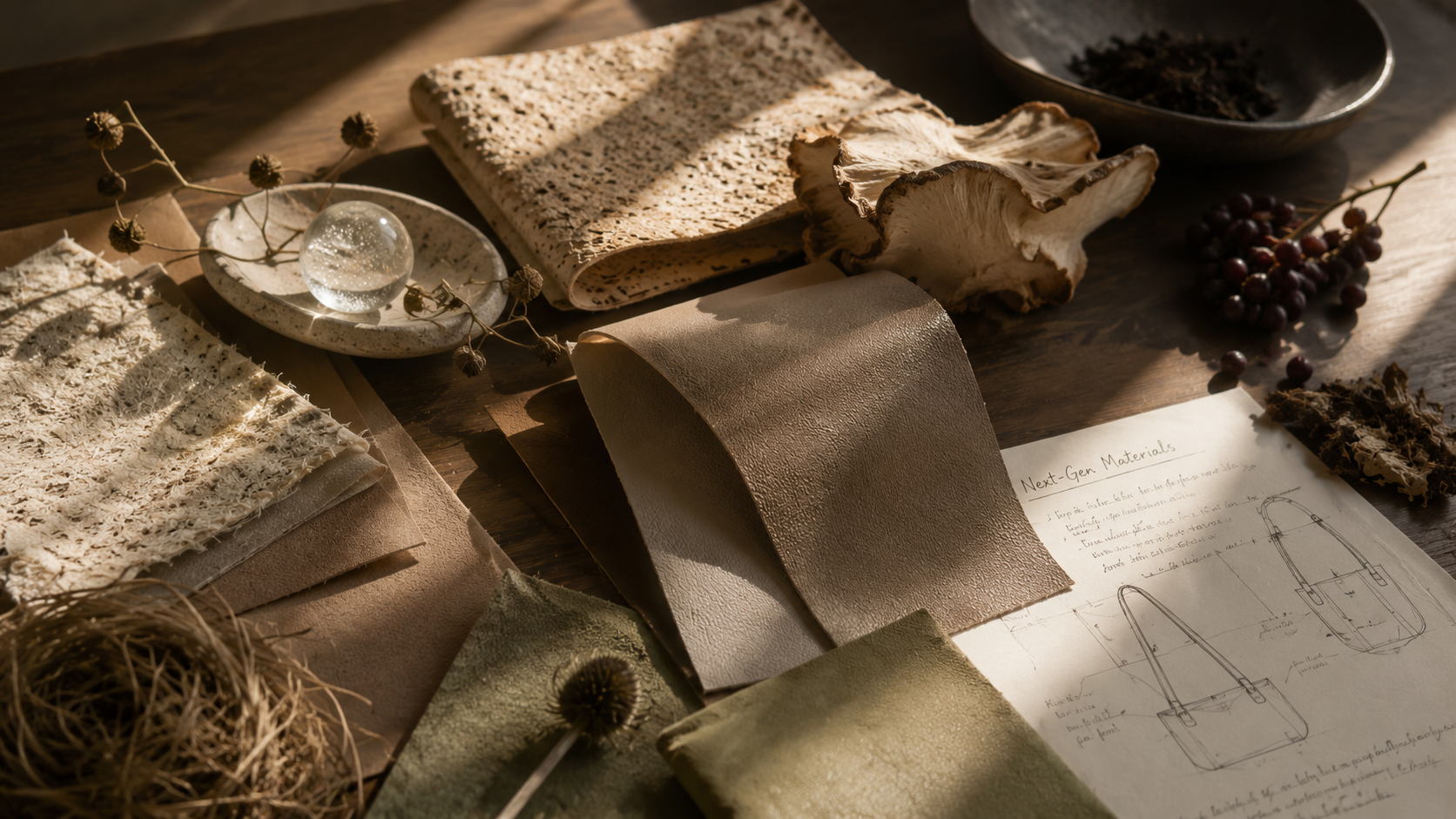
Many consumers now ask a question that would have seemed unusual a decade ago: where does this bag actually come from?
Luxury was once defined by scarcity and status. The bag on your arm was a signal of arrival.
That language still exists — but it is being spoken alongside a quieter one. A growing number of women want their bags to reflect something more personal than brand prestige.
Traditional leather carries a complex supply chain. For many women, that complexity has become difficult to set aside. This is not an activist position. It is a shift in awareness — the kind that changes slowly, through accumulation, until one day a purchase feels heavier than it should.
The sustainable fashion transition happening in handbags right now is not driven primarily by guilt. It is driven by alignment. Women increasingly want a values-driven wardrobe — one where the objects they carry daily reflect what they actually believe about craft, sourcing, and care.
Some bags become part of identity not through status, but through repetition. Through being the right one every single day.
The post-leather future of handbag design is not about sacrificing beauty or craft. It is about expanding what those words can include. A bag chosen with intention — one whose materials are traceable, thoughtfully produced, and designed for emotional durability — represents a different kind of luxury. A self-defined one.
The values-driven wardrobe is not a niche category anymore. It has moved into the everyday rhythm of how modern women shop, carry, and hold on to things.
Bio-based handbag materials are textiles made from renewable, non-animal inputs rather than traditional leather or petroleum-based synthetics. Common sources include:
Derived from apple industry waste, producing a soft, matte surface.
Made from nopal cactus, known for flexibility and low water use.
A fungus-based textile with a fine, structured grain.
Sourced from wine production waste, with a subtle organic texture.
These are not imitations of leather. They are something genuinely new — materials with their own aesthetic logic, their own tactile personality, and their own material intelligence.
Most alternatives to leather bags sold in the past decade were made from PVC or polyurethane — petroleum-based plastics. Bio-based handbag materials are different. They use organic or agricultural inputs and are built around low-impact production from the start.
Unlike animal leather, they do not require the same sourcing infrastructure. Unlike conventional synthetics, they are not built from fossil-fuel derivatives. They occupy a third category: materials that are genuinely beyond the hide.
Reach for a bag made from a bio-based textile, and the first thing you notice is not what it lacks — it is what it offers. A softened matte finish that absorbs light rather than reflecting it. A lightweight carry that feels almost effortless, the bag presents without demanding attention. Edges that curve gently against the shoulder rather than stiffening over months of use.
There is a particular quality to this kind of tactile empathy — the sense that the material responds to daily life rather than resisting it. Structured where a bag needs structure. Quietly flexible where the body asks for give. These are not compromises. They are the texture of tomorrow, arrived early.
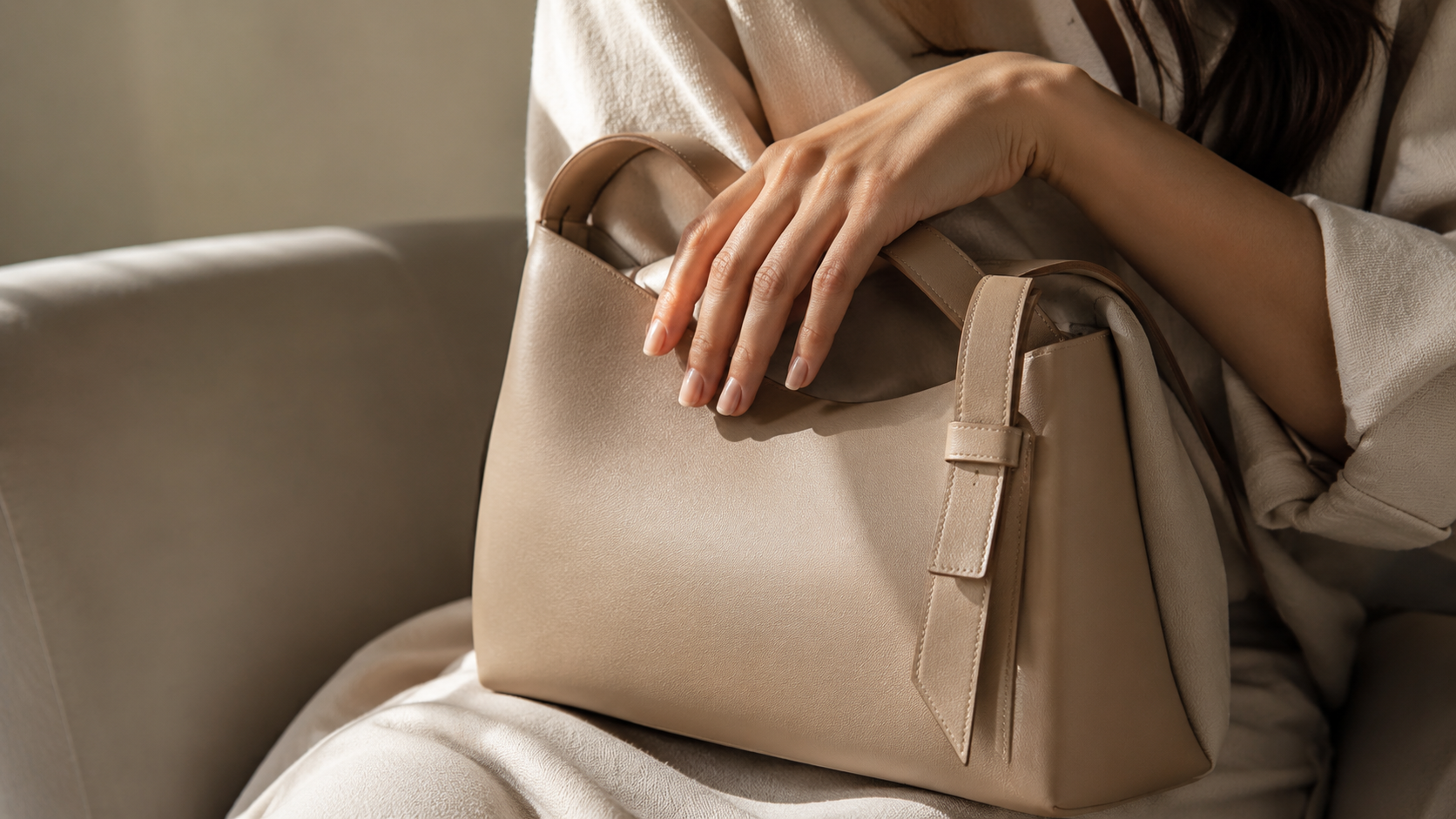
Not just the color. Not the hardware. Something less visible — the accumulated hours of carrying it, the familiarity of the strap against your shoulder, the way it has learned your rhythm. A bag carried every day becomes, over time, an emotional object.
The bag a woman carries every day is present at her desk, beside her on the train, resting against her hip during the hours that make up her actual life. That proximity matters. It creates a relationship — quiet, cumulative, and more emotionally significant than most ownership feels.
For many women, intentional living now extends to what they carry. A bag is part of the daily orbit. The materials it is made from, the values it represents, the comfort it offers — these things are felt, even when they are not named.
Conscious femininity is not self-denial. It is self-knowledge applied to material choices. It is the intellectual softness of knowing what you want, why you want it, and choosing accordingly.
Women increasingly want bags that align with how they live — not just how they appear.
There is something worth naming in the feeling of carrying an object you feel fully at ease with. Not the performance of ethical consumption, but the quiet comfort of alignment — a guilt-free lustre that comes from knowing the beautiful thing you carry is also a considered one.
This is what some in the design world are beginning to call ethical euphoria. When aesthetic pleasure and personal values converge, something shifts. The bag becomes more than beautiful. A kind of aesthetic absolution settles in — not relief, but ease. The low-level discomfort of owning things that conflict with how you understand yourself simply disappears.
The future of luxury may feel softer before it looks different.
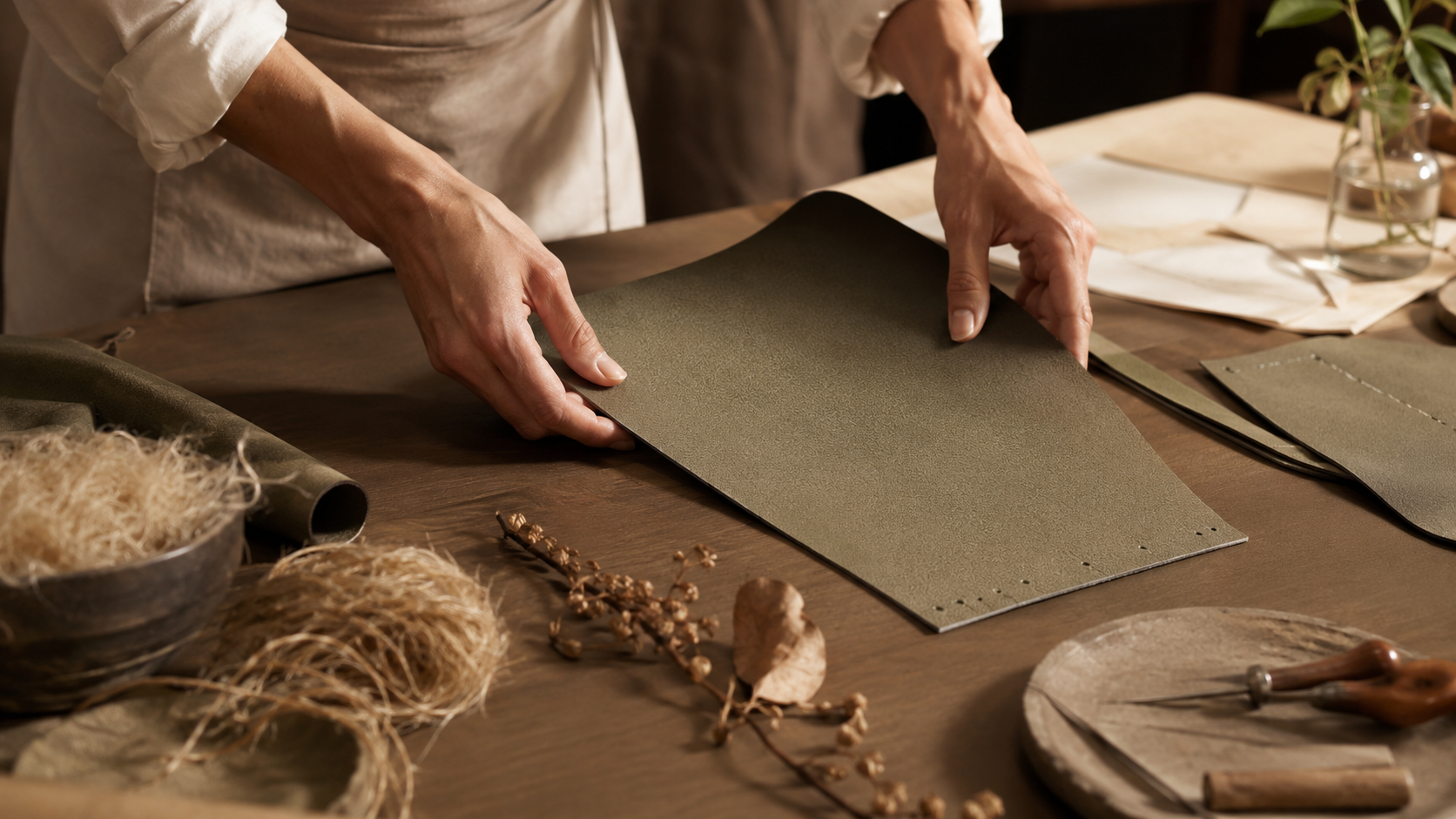
Many consumers now want to know more than a bag’s price. They want to know its story.
Where did the material come from? Who handled it? What decisions were made between raw input and finished object? This is not a niche concern. It is becoming a baseline expectation — particularly for women investing in bags they intend to carry for years.
Radical traceability is the practice of making a bag’s sourcing and production genuinely legible — not through marketing language, but through material specificity. When a brand can say exactly where its apple fiber comes from, how its cactus textile is finished, and who constructed the final bag, something opens between maker and carrier.
Low-impact production is part of this story. But traceability also includes the human story: the atelier, the hands, the considered decisions made along the way. Women are increasingly drawn to bags that feel like they came from somewhere real.
Handbag craftsmanship is not disappearing in the shift toward bio-based materials. It is adapting — and in some ways deepening.
Artisans working with next-gen textiles are encountering materials that behave differently from what they have known for decades. Edge treatment changes. Stitching tension shifts. The way a structure holds over time requires new intuition. This is the artisan’s new light — the particular quality of attention that comes from working with materials that demand fresh understanding.
Material innovation in bags is not purely a technological process. It is a craft evolution. The makers who work seriously with bio-based textiles are building knowledge and skill that did not exist a decade ago. The bag that results carries something invisible but felt: the quality of real attention.
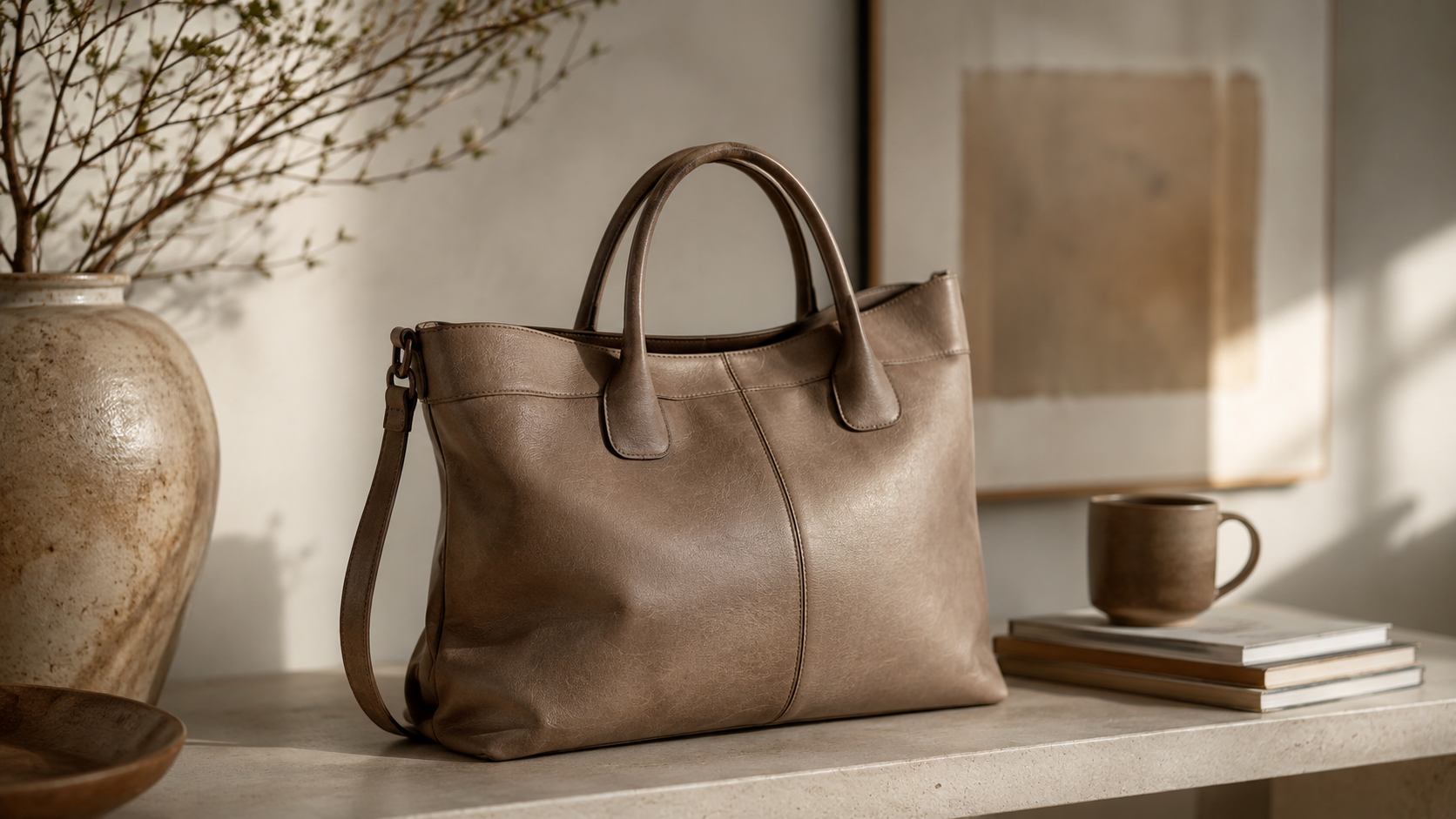
The future of luxury bags is quieter than the past imagined.
Less about visibility, more about resonance. Less about announcing something, more about sustaining it. A bag that wears beautifully over years. A material that softens with the person carrying it rather than stiffening against them.
Emotional durability has become its own form of material value. It describes a bag that remains meaningful five years in — that has softened in the right places, held its structure where it counts, and still feels chosen rather than merely kept.
This is distinct from longevity alone. A bag can last without continuing to feel worth carrying. Emotional durability means the relationship between a woman and her bag deepens rather than fades. That is the new measure of quality in modern accessory design.
A modern muse’s manifesto does not look like excess. It looks like a small, considered collection of objects — each one present for a reason, each one still making sense.
There is a particular kind of beauty in bags that ask nothing of the world beyond what is necessary. Gentle action — making and carrying with care, with a light material footprint, with thought given to every input — is emerging as its own aesthetic position.
It is not a loud position. It does not announce itself. But it is present in the matte surfaces, in the considered construction, in the sourcing choices a brand makes quietly and consistently. Women who carry these bags feel it — not as an ideology, but as a texture.
The future of handbag design belongs to this quieter register. To bags that feel right before they look right — and then manage to look right because of it.
