
Our Location
304 North Cardinal St.
Dorchester Center, MA 02124

Curious? Listen to the expert note.
Modern handbags are changing. Not just in shape or color, but in what they are made from — and what that material choice means to the women carrying them.
Bio-based handbag materials are next-generation textiles created from renewable or non-animal sources, designed to reduce environmental impact while maintaining tactile and aesthetic quality. They are derived from sources like apple fiber, cactus, mushroom mycelium, and grape skin byproduct — materials that look and behave nothing like their origins.
The shift toward bio-based materials reflects a broader transformation in how modern consumers define luxury, identity, and emotional value. It is less about what women are walking away from and more about what they are walking toward: bags that feel considered, beautiful, and fully aligned with how they live.
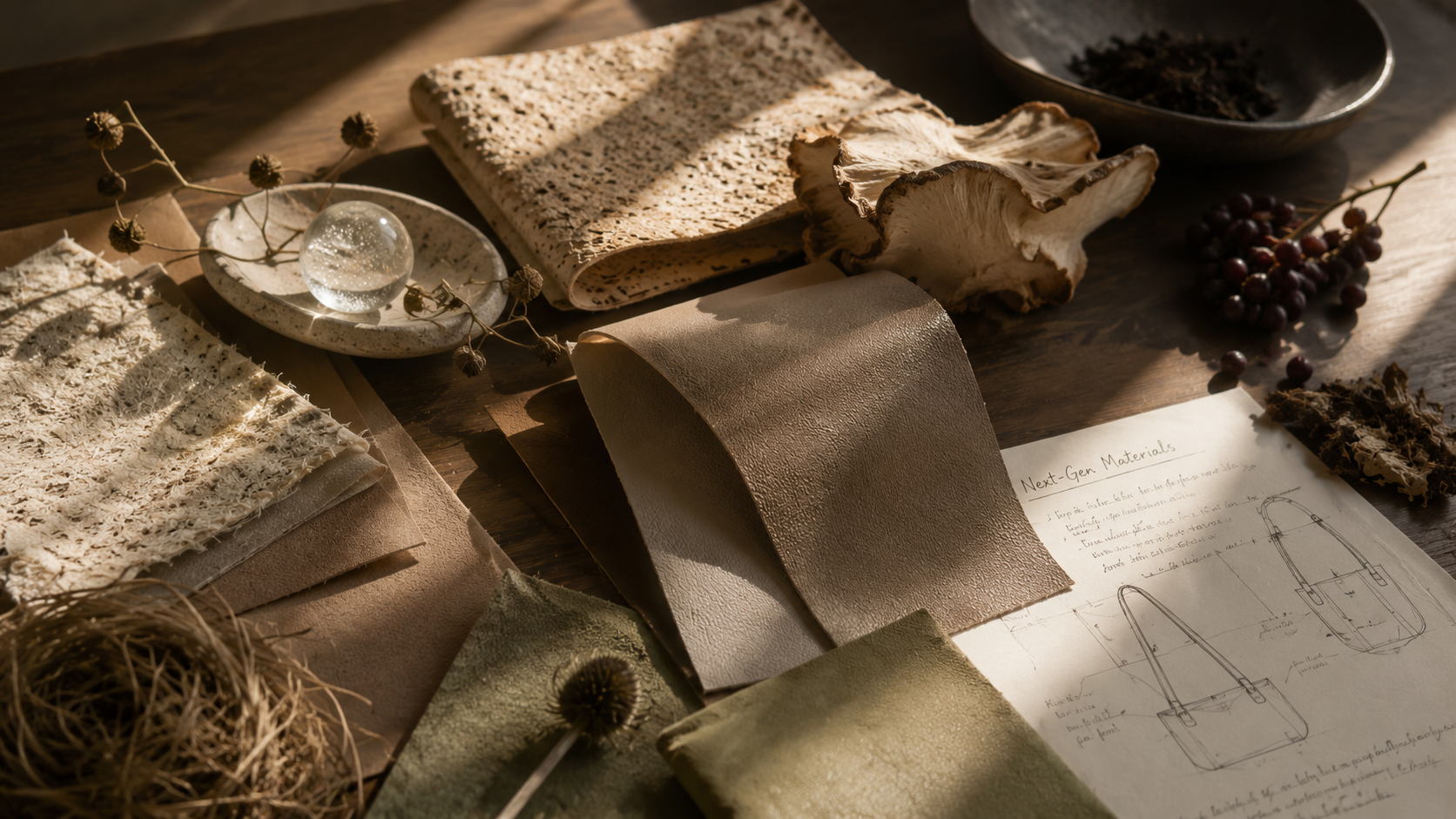
Many consumers now ask a question that would have seemed unusual a decade ago: where does this bag actually come from?
Luxury was once defined by scarcity and status. The bag on your arm was a signal of arrival.
That language still exists — but it is being spoken alongside a quieter one. A growing number of women want their bags to reflect something more personal than brand prestige.
Traditional leather carries a complex supply chain. For many women, that complexity has become difficult to set aside. This is not an activist position. It is a shift in awareness — the kind that changes slowly, through accumulation, until one day a purchase feels heavier than it should.
The sustainable fashion transition happening in handbags right now is not driven primarily by guilt. It is driven by alignment. Women increasingly want a values-driven wardrobe — one where the objects they carry daily reflect what they actually believe about craft, sourcing, and care.
Some bags become part of identity not through status, but through repetition. Through being the right one every single day.
The post-leather future of handbag design is not about sacrificing beauty or craft. It is about expanding what those words can include. A bag chosen with intention — one whose materials are traceable, thoughtfully produced, and designed for emotional durability — represents a different kind of luxury. A self-defined one.
The values-driven wardrobe is not a niche category anymore. It has moved into the everyday rhythm of how modern women shop, carry, and hold on to things.
Bio-based handbag materials are textiles made from renewable, non-animal inputs rather than traditional leather or petroleum-based synthetics. Common sources include:
Derived from apple industry waste, producing a soft, matte surface.
Made from nopal cactus, known for flexibility and low water use.
A fungus-based textile with a fine, structured grain.
Sourced from wine production waste, with a subtle organic texture.
These are not imitations of leather. They are something genuinely new — materials with their own aesthetic logic, their own tactile personality, and their own material intelligence.
Most alternatives to leather bags sold in the past decade were made from PVC or polyurethane — petroleum-based plastics. Bio-based handbag materials are different. They use organic or agricultural inputs and are built around low-impact production from the start.
Unlike animal leather, they do not require the same sourcing infrastructure. Unlike conventional synthetics, they are not built from fossil-fuel derivatives. They occupy a third category: materials that are genuinely beyond the hide.
Reach for a bag made from a bio-based textile, and the first thing you notice is not what it lacks — it is what it offers. A softened matte finish that absorbs light rather than reflecting it. A lightweight carry that feels almost effortless, the bag presents without demanding attention. Edges that curve gently against the shoulder rather than stiffening over months of use.
There is a particular quality to this kind of tactile empathy — the sense that the material responds to daily life rather than resisting it. Structured where a bag needs structure. Quietly flexible where the body asks for give. These are not compromises. They are the texture of tomorrow, arrived early.
